Deadly Escape Story & Lore
Piece together the raid, lockdown, and failed escapes from staff notes and files.
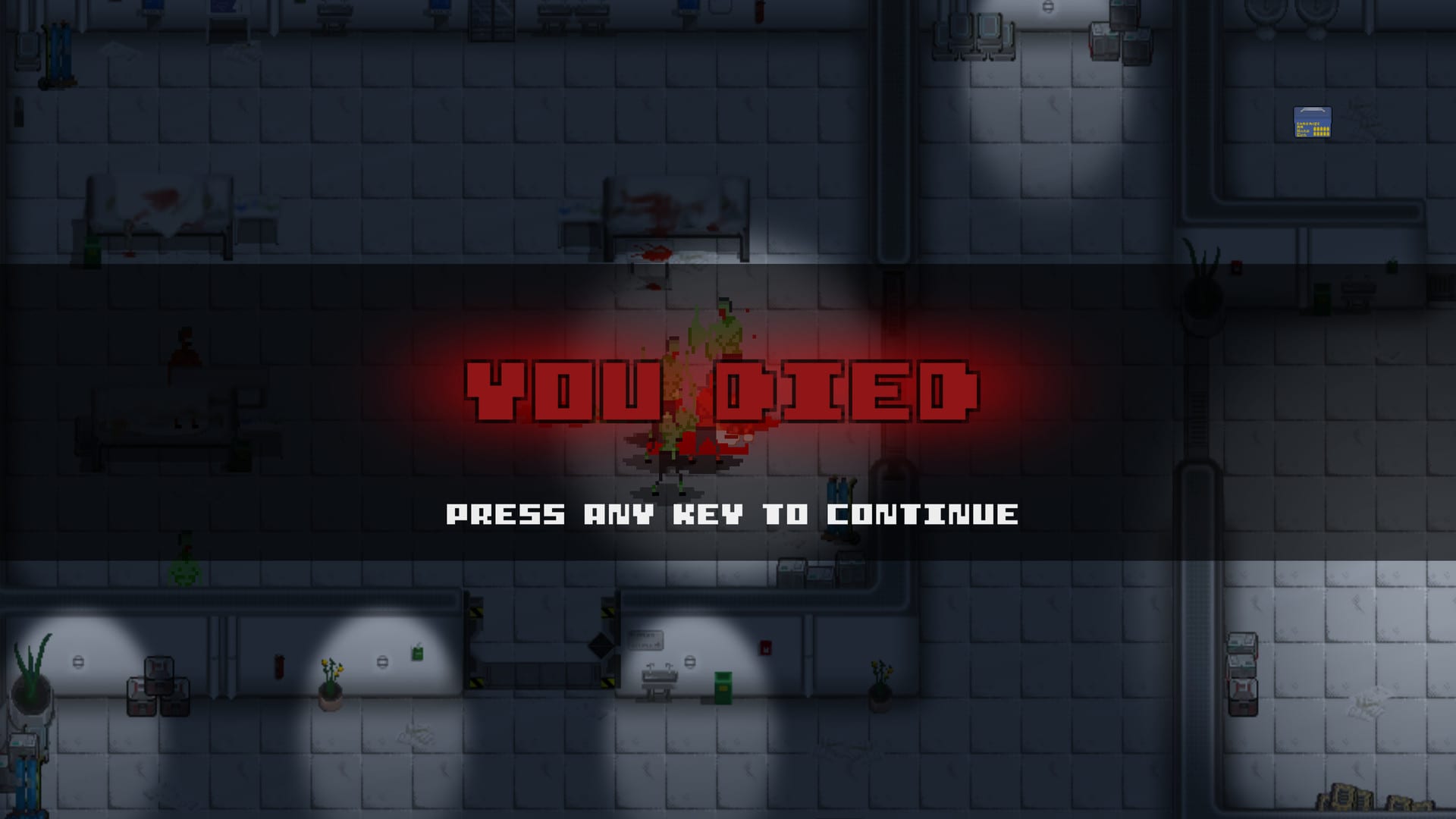
Deadly Escape by Ominous Entertainment presents its story through environmental notes, corpse inventories, and keypad logs rather than cutscene-heavy cinematics. You play a wounded survivor abandoned in an infirmary after an undead raid on a larger research or security complex. Everyone around you is dead, doors are sealed, and the only forward path follows colleagues who tried — and failed — to escape before you regained consciousness.
This lore guide consolidates what readable documents imply about the timeline, who the protagonist likely is, why the facility fell, and how narrative beats align with gameplay zones on the Infirmary & Facility Map. For puzzle order without story spoilers, use the Full Walkthrough; for combat context during scripted ambushes, see Combat & Ammo.
Premise — what the Steam description establishes
Official store text frames the campaign clearly:
- A complex was raided by undead monsters — not a gradual infection but a violent breach.
- The protagonist is wounded and left behind during evacuation or collapse of command.
- The infirmary is lockdown with mass casualties.
- Escape requires tracing prior attempts through keys, blood trails, and personal effects.
The game sells itself as episodic survival horror inspired by nineties classics — limited saves, scarce ammo, and dread through audio rather than constant dialogue. Lore delivery matches that design: short memos, not voiced exposition.
Timeline reconstruction
While exact dates rarely appear in pixel text, documents collectively suggest this sequence:
Phase 1 — Normal operations
Staff memos reference routine security shifts, patient transfers, and generator maintenance schedules. The complex housed medical wings, laboratories, and industrial support levels — consistent with multi-zone map layout in Infirmary & Facility Map.
Phase 2 — Breach or outbreak spike
Emergency handwriting replaces typed logs. Notes mention undead entering restricted corridors, failed quarantine, and orders to seal passage doors. Some entries blame external raiders; others describe reanimated personnel inside the infirmary itself.
Phase 3 — Lockdown and massacre
Automated lockdown traps survivors with infected. Nurse logs describe giving patients sedatives before being overrun. Security keys are scattered as officers died mid-retreat.
Phase 4 — Failed escape attempts
Your predecessor colleagues left keycards on corpses, codes on whiteboards, and fuse instructions near generator rooms. Each failed route becomes your forward path — gameplay literally walks through their mistakes.
Phase 5 — Your wake-up
The protagonist regains consciousness after the worst violence ends. No rescue team arrives; leaderboards imply others escaped on their own timeline, competing for fastest survival.
The protagonist
The game never mandatory-voices a full biography, but context clues suggest:
- Not a random patient — familiarity with firearms and facility layout implies security, maintenance, or research staff.
- Injured but mobile — waking in infirmary beds ties to triage during the raid.
- Motivated by exit only — no revenge quest; horror comes from desperation.
The Players & Characters hub collects named references when documents mention staff by role or initials.
Key factions and roles
Documents usually reference roles rather than deep character arcs:
| Role | Lore function |
|---|---|
| Nurses and orderlies | Keypad codes, med supply locations, patient ward keys |
| Security | Color keycards, passage door access, ammo caches |
| Maintenance | Generator breakers, fuse maps, barrel-strewn warehouses |
| Research staff | Lab wing access, specimen room notes hinting at outbreak origin |
| Administration | Lockdown policy memos, evacuation abort orders |
No friendly NPCs survive to speak with you in-game. Horror comes from reading their final messages.
Facility raid theories
Notes conflict just enough to keep interpretation open — intentional for short horror games:
External raid theory
Some logs describe intruders or monsters entering from outside, matching store language about a complex raided by undead. This implies assault from another site or surface breach.
Internal outbreak theory
Lab memos reference specimens, miasma, or failed containment (terminology varies by document). These imply the undead originated inside research wings before spreading to the infirmary.
Hybrid reading
Most players accept a hybrid: internal experiment gone wrong accelerated by security failure during an external crisis. Either way, gameplay treats undead as uniform threats — see Getting Started for mechanical treatment.
Major locations in story order
Align narrative beats with zones from Infirmary & Facility Map:
- Infirmary recovery wing — where you wake; triage logs explain initial casualties.
- Clinical corridors — nurse stations with patient death records.
- Maintenance and generator halls — maintenance staff died restoring power for failed evacuations (I See The Light gameplay tie-in).
- Security passage network — bulkhead doors named or numbered in notes; matches passage door progression in Full Walkthrough.
- Boss arena — often tied to a figure referenced in warnings on doors; fight details on First Boss Fight.
- Deep facility / chapter two — boiler and tram levels with evacuation abort memos.
- Final hatch or surface exit — last note sometimes contrasts your success with predecessors’ deaths.
Documents worth finding
Optional reading enhances atmosphere but rarely gates progress except when codes hide in plaintext:
- Lockdown authorization forms — explain red lights above doors.
- Generator maintenance checklists — parallel puzzle steps in walkthroughs.
- Personal letters — humanize corpses you loot for keys.
- Evacuation maps — mirror player backtracking structure.
Collecting every note is optional for completionists; achievement hunters focus on combat tallies in Combat & Ammo instead.
Themes and tone
Deadly Escape mixes sincere survival horror with occasional absurd Steam tag humor (community tags include comedy and memes). Lore tone stays grim in-document — gallows humor appears more in player reactions than in-game files.
Themes include:
- Institutional failure — lockdown protects the complex, not individuals.
- Industrial guilt — research wings imply staff knew risks.
- Survival selfishness — you walk over bodies because stopping means death.
Relationship to real-world settings
The game is fictional. Do not confuse it with Roblox delivery sims or unrelated escape-room titles. Getting Started clarifies the Steam product identity versus similarly named games.
Narrative gaps and cut content
Steam forum threads from 2018 ask whether additional chapters would arrive as DLC. As of the documented release, two chapters complete the arc; unanswered questions about outbreak origin may have been reserved for unshipped episodes. Check Updates for patch history.
Using lore to improve gameplay
Reading notes is not flavor-only:
- Codes appear in memos — saves trial-and-error on keypads.
- Role signatures hint key colors — security versus nursing keys.
- Generator notes reduce backtracking — know breaker order before entering maintenance loops.
When stuck, cross-reference document text with Full Walkthrough puzzle sections rather than spoiling entire routes prematurely.
Related guides
- Infirmary & Facility Map — where documents physically sit
- Full Walkthrough — story-critical item order
- First Boss Fight — climax of chapter one narrative
- Guides Hub — return to mechanical guides
- Official Links — Steam store description and community lore discussion
Frequently Asked Questions
Quick answers to the most common questions.
What happened before the game starts?
Undead raided the facility, triggering lockdown. Staff died attempting escape while you were wounded and left behind in the infirmary.
Who is the playable character?
A wounded survivor implied to be staff or security familiar with the complex. The game reveals identity through notes rather than voiced cutscenes.
Do I need to read every document to finish the game?
No for basic completion, but notes often contain keypad codes and key hints that save time. Lore collectors should read everything.
Does the story continue after chapter two?
The base Steam release ends after two chapters. Additional episodes discussed in 2018 forums were not shipped as standard DLC.